Chess Competition at Nelson's School: Let's Think Beyond the Board
- Nelson's School
- Aug 12
- 5 min read
With the spirit of learning and healthy competition, Nelson's School organized a Chess Competition for its students, providing them with an exciting opportunity to demonstrate their chess skills, challenge their thinking abilities, and experience the joy of competitive learning. The Chess Competition was not simply about winning a match. It was about encouraging students to think strategically, remain focused, respect their opponents, and learn from every move. Through such Student Development Activities, the school continues to create opportunities where education extends beyond textbooks and classrooms.

Learning Through Chess: Every Move Has a Lesson
One of the most valuable aspects of Chess for Students is that the game naturally teaches children to think before they act. A player cannot simply make a move without considering what might happen next. Students learn to ask themselves important questions:
What could happen after this move? What might my opponent do? Is there a better strategy? Should I attack, defend, or wait?
This process develops Critical Thinking Skills and teaches students to analyse situations before making decisions. The lesson extends far beyond the chessboard:
Think carefully. Plan wisely. Make responsible decisions. Be prepared for the consequences. These are valuable principles that children can apply to their studies, relationships, challenges, and everyday lives.

How Chess Supports Student Development
The Benefits of Chess go far beyond learning how to play the game. Regular chess practice can contribute to intellectual, emotional, and social development.
1. Strategic Thinking
Chess encourages children to think several moves ahead. Students learn to anticipate possible outcomes, develop strategies, and adjust their plans when circumstances change. These are essential Strategic Thinking Skills that can be useful in academics and everyday decision-making.
2. Concentration and Focus
A chess match requires continuous attention. Players must carefully observe the board, remember previous moves, and stay alert to possible threats. This strengthens Concentration and Focus and encourages students to remain attentive while completing tasks.
3. Problem-Solving Skills
Every chess position presents a challenge. Students need to examine the situation, identify possible solutions, compare alternatives, and select an appropriate move. This makes chess an excellent activity for developing Problem-Solving Skills.
4. Decision-Making Skills
Chess teaches children that decisions have consequences. Players must make thoughtful choices while considering both their own strategy and their opponent's possible response. This develops Decision-Making Skills and encourages responsible thinking.
5. Patience and Emotional Control
Not every game goes according to plan. Students may face unexpected moves or difficult positions. Chess teaches them to remain patient, calm, and composed instead of making rushed decisions.
This ability to manage emotions is an important part of Life Skills Education.
6. Logical and Analytical Thinking
Chess involves patterns, possibilities, calculations, and logical relationships. Players learn to evaluate situations and identify the most suitable course of action. This supports Logical Thinking Skills and Analytical Thinking.
7. Memory Development
Remembering chess rules, patterns, openings, strategies, and previous moves exercises the mind. Such Memory Development activities can contribute to stronger mental processing and learning abilities.
8. Creativity
Although chess is highly strategic, it also provides opportunities for creativity. Players can explore different combinations, tactical ideas, and unexpected approaches to challenging positions.
9. Time Management
Chess competitions can require players to make decisions within a limited amount of time. Students learn to balance careful analysis with timely decision-making, developing valuable time-management habits.
10. Confidence and Discipline
Participating in a School Chess Competition gives students an opportunity to test their abilities in a competitive setting. Successfully applying a strategy can build confidence, while regular practice develops discipline and perseverance.

Chess Competition Experience: Quiet Boards, Active Minds
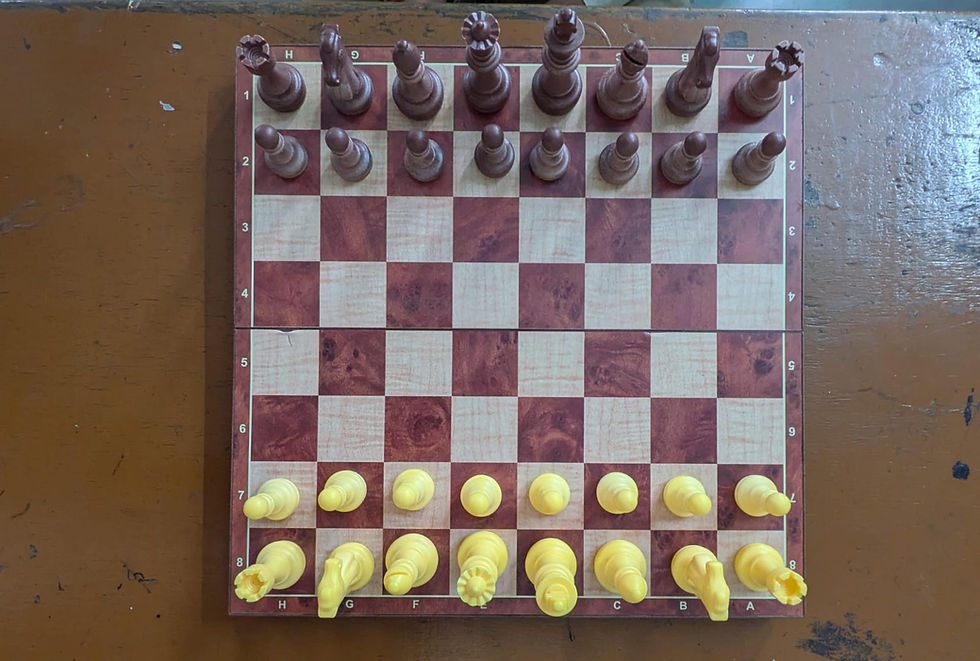
One of the most memorable aspects of a Chess Competition in School is the unique atmosphere it creates. Unlike loud sporting events, a chess competition can be remarkably quiet. Yet behind that silence, the minds of young players are constantly active. Students carefully studied their chessboards, planned their next moves, evaluated their opponents' strategies, and waited patiently for the right opportunity. Every move reflected thought and concentration.
At times, a strategic move could completely change the game, creating moments of excitement and anticipation. Students experienced the pressure of challenging positions while learning to stay calm and focused. Teachers provided encouragement and support, while students appreciated the efforts of their fellow participants. The environment reflected a healthy balance between competition and learning. The experience demonstrated that Chess Activities for Students can transform a traditional game into a meaningful educational activity.
Healthy Competition and the Spirit of Sportsmanship
A major lesson from any Chess Tournament for Students is that competition is not only about winning. Healthy competition motivates students to improve their skills, practise harder, overcome challenges, and discover their strengths. At the same time, it teaches them that success must be accompanied by humility and respect.
During the competition, students had opportunities to learn the importance of:
Respecting opponents
Following competition rules
Waiting patiently for their turn
Accepting results gracefully
Learning from mistakes
Appreciating another player's effort
Celebrating achievements without discouraging others
Demonstrating Sportsmanship
A win can bring happiness, while a loss can provide an important lesson. Both experiences can contribute to growth. The real achievement is not simply defeating an opponent; it is becoming a better player and a better learner through the experience.

Nelson's School Encourage Students to Learn Beyond Textbooks With Events Like A Chess Competition
At Nelson's School, education is viewed as a journey that extends beyond academic lessons. Educational Activities, Extracurricular Activities, sports, competitions, and Student Development Activities provide children with opportunities to discover their talents, develop confidence, and learn important life skills. A Chess Competition is one such opportunity.
Through Chess Competitions, students experience the excitement of competition while developing concentration, strategic thinking, logical reasoning, patience, decision-making, and sportsmanship. These experiences complement classroom education and contribute to the development of confident, disciplined, thoughtful, and responsible individuals.

Celebrating Participation, Progress, and Achievement of Students
The success of the competition cannot be measured only by who wins a particular game.
Every student who participated demonstrated courage by stepping into a competitive environment. Every thoughtful move represented learning. Every challenging position provided an opportunity to improve. Every victory brought confidence, while every defeat offered a lesson in perseverance. This is the true value of Student Achievement.
The competition celebrated not only results but also participation, effort, improvement, discipline, and sportsmanship.
We as elders can play an important role in helping children develop hobbies that stimulate curiosity and intellectual growth. Encouraging children to play chess does not necessarily mean expecting them to become professional players. The goal can simply be to provide children with an enjoyable activity through which they can think, explore, practise, make mistakes, and improve. We can encourage children to play friendly games, participate in school competitions, practise regularly, and treat both victories and defeats as learning experiences. When children receive encouragement rather than excessive pressure, activities such as chess can become meaningful parts of their personal development.

Every Chessboard, Every Game Teaches us a Life Lesson
A chessboard may contain only 64 squares, but the lessons it offers can extend far beyond them. The Chess Competition at Nelson's School gave students an opportunity to practise planning, patience, concentration, logical reasoning, decision-making, perseverance, and emotional control. More importantly, it encouraged them to understand that challenges can be approached with confidence when we pause, think carefully, and choose our actions wisely.
The true success of the competition was not measured only by who won the game. It was reflected in how students participated, learned, improved their Chess Skills for Children, respected their opponents, accepted results, and enjoyed the experience.
At Nelson's School, such activities reflect the school's commitment to Holistic Education, where academics, competitions, sports, extracurricular activities, and life skills work together to nurture well-rounded individuals.
As students continue their journey, may they carry the lessons learned from every chessboard into their classrooms and everyday lives:
Think before you move. Plan before you act. Stay patient when challenges arise. Learn from every experience. And always move forward with confidence.


